Month: August 2018

  • Troubleshoot Tuesday: 3 Tips on Dealing with “The Other Place” Derailment in a North American Context

    There you are, a facilitator in Canada or the United States, sitting in a circle or at the front of a classroom, explaining the history of oppression and colonialism, or why racism and white supremacy is basically synonymous, when someone raises their hand– or often times straight up interrupts you:

    “But what about China’s history of colonialism?”

    “But what about how different African and Filipino tribes took slaves?”

    “But what about how Japan is racist to other peoples?”

    “But what about how Arab countries are sexist?”

    Here we go again.

    The problem with these questions is that, if the person who asked them isn’t from there, they seem to come from an emotional place that is

    • terrified of blame and guilt, so they need to subconsciously or actively deflect and derail what they perceive is blame being put on them,
    • determined to undermine the credibility of the facilitator because they don’t like you or don’t like seeing you as some kind of “authority” due to their own oppressive or biased views, or
    • a combination of the two.

    The sad part is most folks who ask these questions don’t actually see themselves as trolling you or being micro-aggressive, they may actually see themselves as being genuinely curious or playing “devil’s advocate”. As an exorcist, I have more respect for people who think they’re being curious than for folks that declare themselves an advocate for the devil, to be honest. But, anyway…

    So what do you do? Here’s some tips that come from a place where you assume the best, i.e. that the person actually believes they’re being curious: 1) start the workshop already framing the focus and purpose of the learning for a North American activist context, 2) remind folks what local activism and anti-oppression means, and 3) ask the querent how they intend to work in solidarity with the activists in the areas that they’ve mentioned.


    Are you a diversity coordinator, anti-oppression facilitator, or equity officer interested in reading the rest of this article? Click on the link and subscribe for $10/month to get anti-oppression tutorials, videos, posters, hand-outs, and trouble-shooting guides like this one twice a week. By becoming a patron, you support healing work among my communities, and the indigenous Elders that mentor me.

    https://www.patreon.com/posts/troubleshoot-3-20894786

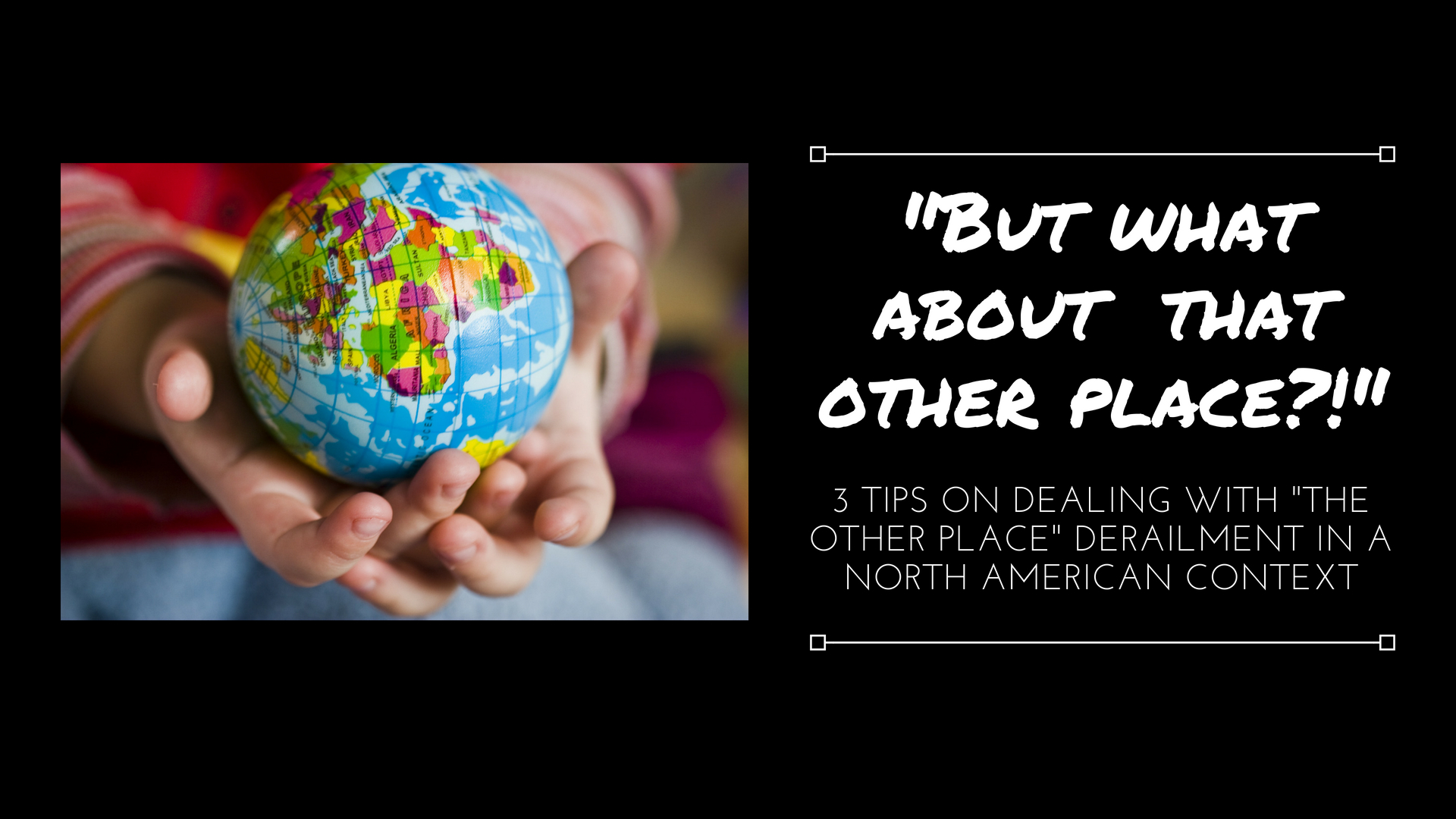
    [Image created using Canva. Image description: The background is black. On the left side of the image is a photograph with muted colours of baby blue, fuchsia, red, yellow, and rose pink. In the foreground of the photograph are two pale hands holding out a small colourful globe of the planet Earth. The words in white beside the photograph, in between two line separators, are the following: “”BUT WHAT ABOUT THE OTHER PLACE?!” 3 Tips on Dealing with “The Other Place” Derailment in a North American Context.”]

  • Musings Monday: Nanay Myrna Pula


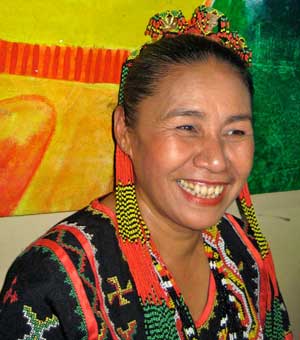
    Photo taken from the Manila Times: https://www.manilatimes.net/manila-collectible-features-…/…/. Image description: A smiling brown-skinned woman with black hair wearing beaded and hand-stitched regalia.

    The word “Nanay” means “mother”, and is a kind of honorific when referring to Nanay Myrna Pula. She is a tribal Elder of the T’Boli people, a culture bearer, and storyteller of epics. She has been preserving and translating the work of her people, having been one of the few folks in her tribe that was sent to Western school but returned to continue the indigenous way of life.

    She’s been recording the work of the chanters, priestesses, and other Elders of her tribe through audio tapes and written papers, and, with the help of generous sponsors like myself and my patrons on Patreon, she will be able to digitally transfer and preserve the work for future generations.

    Nanay Myrna Pula also hopes to begin a School of Living Tradition where she can gather some of the last living Elders of traditional ways and arts in her tribe, and have them live under one village compound to teach the next generation of T’Boli before, after, or as an alternative to going to Western school.

    But why is she everybody’s “mother”? I’ve only spent time with Nanay Myrna Pula in person twice– in a week-long gathering in Mindanao in July 2015, and in another week-long gathering in Luzon in July 2017, both called Pamati.

    Before my second meeting with her, I had a dream sent to me by my Ancestors that I would receive a talisman to remind me of my purpose, and I would receive it during my next trip with indigenous Elders of the Philippines. Sure enough, one day as I was walking around the meeting area of the Pamati 2017 Gathering, Nanay Myrna Pula came up behind me and slipped a beaded gong necklace around my neck, and would not take money for it.

    At another point in the gathering, after many diasporic Filipino/Pilipinx delegates (especially myself) had wept and explained the loss of their culture and connection to the land and mentors to guide them, Nanay Myrna stood and proclaimed that she would be mother and grandmother to us all, that we could dry our tears and lean on her. It is that kindness and generosity of spirit, both to her own tribe, and to us youth and diasporic peoples of different nations than her own, that, for me, has earned her the honorific of Nanay.


    Read the rest of the article here and become a patron today: https://www.patreon.com/posts/20886291


  • Fresh Friday: To the Waters & the Wild

    New song and artwork!

    Fun fact: This song actually came to me in a dream from my Ancestors. I was watching a music video in the dream, and I was shocked to discover that the video was of myself, performing this exact song with a pop punk band. When I woke up, I remembered most of the words and the tune, but had to figure out the chords and title for myself.

    The title comes from this quote:

    Come away, O human child!
    To the waters and the wild
    With a faery, hand in hand,
    For the world’s more full of weeping than you can understand.
    – W.B. Yeats, “The Stolen Child”

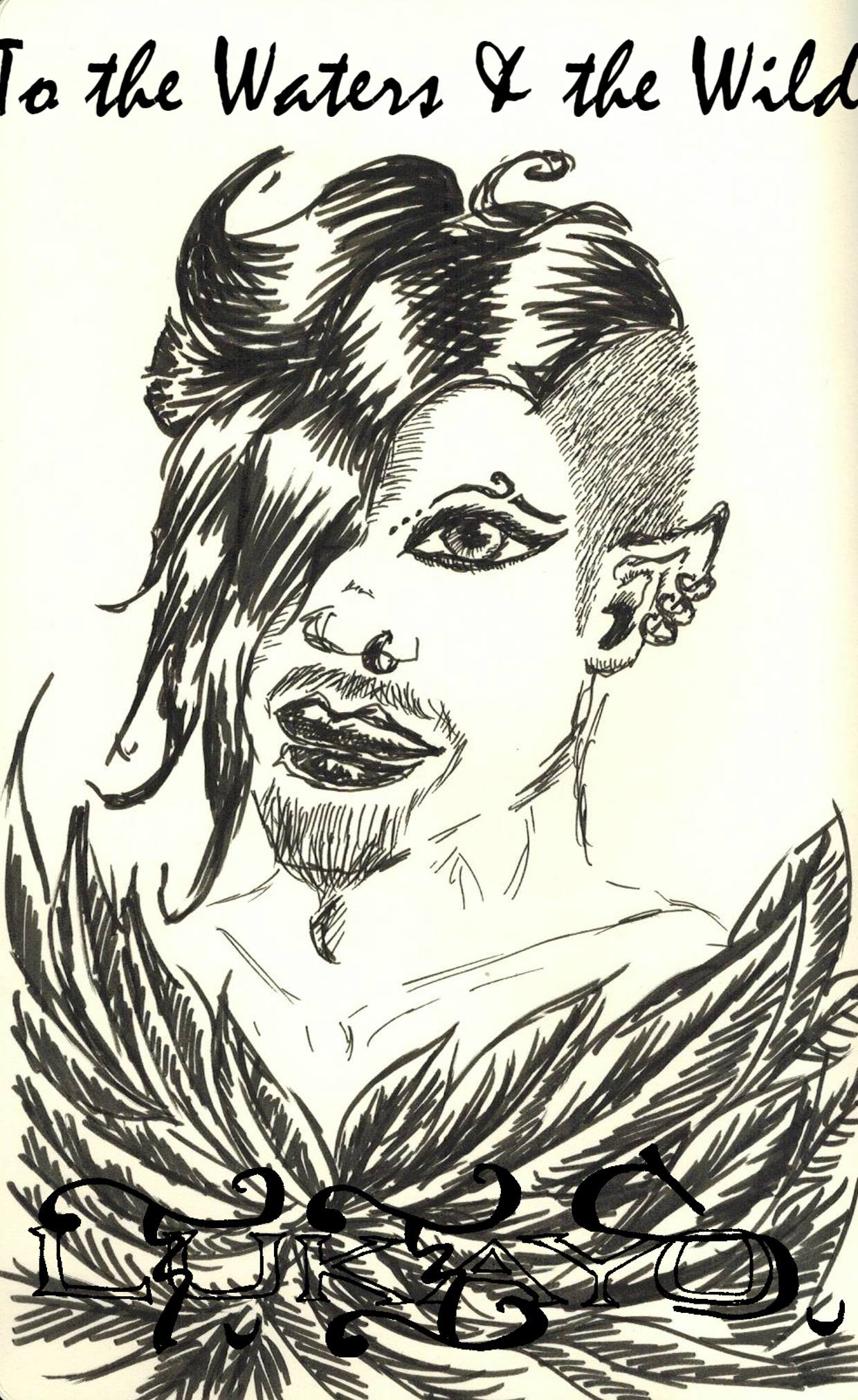
    Image description: An inked portrait of a being with facial hair, darkened lips, ear and nose piercings, stylized eyebrows, a shaved undercut, pointed ears, wearing dark feathers. Above the portrait are the words “To the Waters & the Wild”. At the bottom of the portrait, hidden the feathers, is a signature in English and Bikol basahan: “Lukayo”.

    If you want to hear the song, click on the link to become a patron. For as little as $1/month you can support healing work among my communities, and the indigenous Elders that mentor me.

    https://www.patreon.com/posts/fresh-friday-to-20845767

  • Throwback Thursday: Confessional

    Note: The original was written in 2006 but this is the updated 2018 version.

    Content warning: gender dysphoria, cisgenderism, allusion to sexual assault

    This room is my confessional
    And you are all my witnesses
    That I am afraid – I am fucking terrified
    To be…a woman
    That I am terrified
    I’ll never be a good enough man

    And we are born into this world with certain roles laid out for us
    M
    We are born into this world with certain roles laid out for us
    F

    And they tell me, “There’s nothing to fear, lil kid,
    You just ARE a woman.
    You just ARE a man.”

    But they are lying through their toothy smiles
    Their eyes undressing and oppressing me
    Because if it’s all about just BEING a gender
    Then how come I can BE a gender so BADLY?
    How come everything I do and say
    Is not macho enough or some lady-like way?

    Wanna read the rest of the poem and watch the Youtube video performance? Click on the link to become a patron. For as little as $1/month you can support healing work among my communities, and the indigenous Elders that mentor me.

    https://www.patreon.com/posts/20809402

  • Workshop Wednesday: Anti-Oppression Learning Tools

    In any anti-oppression workshop you’re giving, remember that you have to teach your participants the following:
    • What is privilege and oppression?
    • How can I be less oppressive?
    • How can I be a good ally?
    • How can I put on inclusive events?
    • How can I make my group or organization less oppressive?
    • How can my group understand our oppressive dynamics so we can work together better?
    • What are ways to stop oppressive comments?
    • What are ways to stop oppressive events?
    • What are ways to stop oppressive institutions?

    Participants may want more information on one thing instead of another. For example, a local group may want to know more about stopping oppressive institutions while another group wants to know how to run good events. It’s important to ask your audience what they’re looking for and also understand the community you’re serving so that you can choose the right tools for any particular workshop you’re putting on.

    I divide tools into 2 kinds:

    1. Theory & Concepts
    2. Action

    Your workshop should have a mix of theory and action because it’s important for many people to know why the action works that way. For example, it’s impossible to build great allyship without a basic understanding of what privilege is.

    Lastly, I encourage you to make your own tools utilizing your own talents of visual art, spoken word, theatre, gaming, video, and more!


    Want to have access to the chart and other anti-oppression related teaching tools? Click on the link and subscribe for as little as $2/month. By becoming a patron, you support healing work among my communities, and the indigenous Elders that mentor me. 

    https://www.patreon.com/posts/20211678

  • Troubleshoot Tuesday: 3 Ways to Learn The P-Word

    Whether you’re running a presentation for your job, doing a workshop for your community, or trying to have a conversation with that “friend” (you know which one I’m talking about), you may have to struggle with explaining the word that gets 25% of people’s back’s up: privilege.

    (Note: I am not a statistician, so when I write “25%”, I mean, roughly, the amount of eye-rolling, pursed lips, frozen facial expressions, deep-diaphragm-groaning, and spirit-leaving-body experiences I feel with my spidey senses every time I drop the P-word in a crowd.)

    In this first Troubleshoot Tuesday edition, I’m going to take you through three general kinds of ways to explain privilege while comparing the pros and the cons: checklists/flowers/etc., games and gaming analogies, and storytelling and group work activities. Some of these are better for discussions you’re quickly having at a party, while others make more sense if you’re training your collective that’s committed to social justice and solidarity work.

    Regardless, always remember the objective: the point of explaining privilege is not to make people feel bad– it’s to realize the secret powers they never knew they had that can be used for the consensual benefit of their friends, loved ones, and communities.

    That’s why I have a bit of a pet peeve with the term “check your privilege”– I always feel like what people mean to say is “hey bud, you’re not understanding the full context of how oppressive this situation might be and how you benefit from it unintentionally”. Maybe it would make more sense to say “Use your privilege to help me, not hurt me!” Not as catchy though, I know, but keep that in mind as you choose which method of explanation or teaching is right for you and your audience.


    Are you a diversity coordinator, anti-oppression facilitator, or equity officer interested in reading the rest of this article? Click on the link and subscribe for $10/month to get anti-oppression tutorials, videos, posters, hand-outs, and trouble-shooting guides like this one twice a week. By becoming a patron, you support healing work among my communities, and the indigenous Elders that mentor me.

    https://www.patreon.com/posts/20769892

  • Musings Monday: 5 Common Mistakes I’ve Made in Transformative Justice Work

    Content Warning: mentions of abuse, violence, sexual assault, oppression.

    Whenever I get the phone call, or text message, or email, my heart seems to drop into my stomach and my fists clench, like I’m about to throwdown in a school yard or poetry slam.

    “He hurt me, and he’s hurt others– what should I do?”

    “She touched me… but I don’t want to call the police. I just want her to stop doing this!”

    “They’re a marginalized person, I don’t want to leave them but… but this relationship is so messed up! How can I fix this?”

    See, I recently attended a training in Chicago (originally called Zhigaagong, O’nionkserì:ke, and Shikaawke, on the territories of the Miami, Peoria, Potawatomi, and Illinois Native Americans). At this training, run by the amazing Just Practice Collaborative, we talked about transformative justice and community accountability, reminding me about all the times I’ve been pulled into a situation of interpersonal violence and oppression among poetry communities, queer and trans social circles, and activist collectives. Not only did it remind me of how I’m brought into these situations, I also remember every single one of the mistakes I made.

    Maybe you’re like me, the type of person a friend of a friend calls because they think you can help out, start a process, talk to an abuser, find community resources, or just know somehow what to do. Maybe you’re like me, in that you’ve also been abused and an abuser, that you’ve worked on your shit and continue to work on your shit, and just want the people around you to work on theirs and stop hurting each other and being hurt. Maybe you’re like me, in that you think there’s another way than tearing people and families apart with over-policing and under-resourced mental health and community services.

    If so, this rueful, yet hopeful, post is for you. Here’s some of my mistakes. I hope they help you and your people out.

    Wait, what’s TJ?

    If I was going to explain TJ to your Lola or grandma, it would go something like this:

    “Lola, this is the idea that there are some other things people can do instead of calling the police in situations like when their friends are having a fight or when Tito Nonoy is hurting Tita Lenlen. We try to solve the problem together, as a group of people, as a community. We try to make sure that the solution doesn’t use violence or revenge, and most times it means changing the ways the whole family and community works so that this behaviour doesn’t happen anymore.”

    “Huh,” your grandma will say. “Sige, anak. But who is in charge?”

    “Whoever we choose to be in charge, Lola. Maybe you. Maybe Ate Bing. Maybe Kuya Jose. We make sure everybody gets someone that can listen to them, and someone organizes a plan that everybody trusts. Everybody has to agree, though.”

    “What if somebody doesn’t agree, anak?”

    “Then we don’t do that specific thing. We can do other stuff besides calling the police– making a safety plan, having a community meeting to teach people other ways besides hurting each other, having a mediator, and other stuff like that.”

    “Ay jusko, this is complicated and hard.”

    “Alam ko, Lola. I know.”

    1. I didn’t know my options.

    In the beginning, I thought “transformative justice” and “community accountability” were the same things. Nobody explained to me, like in the imaginary exchange with your Filipino grandma that I just had in the above section, that there were other options besides trying to have a community support somebody’s accountability process– i.e. to support someone to be responsible for their actions, so that they can stop hurting people and repair the relationships around them.

    Here are some situations where a community accountability process isn’t an option:

    • If the person that did harm doesn’t want to take responsibility
    • If the survivors want revenge
    • If an institution, like the courts, the police, social workers, etc., get involved
    • If there’s not enough people in the community to offer support or organize a process

     But you can still do TJ! The Community Interventions Toolkit lists different kinds of options. There’s also the Bay Area Transformative Justice Collective’s Pods and Pod Mapping. I’m going to write further about this in the upcoming sections.

    2. There wasn’t enough support for everybody involved.

    Usually, if a community is survivor-centric, people remember to make sure that the survivor gets support. If folks know about TJ, they also think about getting the person who’s done harm some kind of support, whether it’s to remind them of their humanity while they go through all of this, or whether it’s to keep them on track about how to take responsibility, or both.

    But the support train doesn’t end there. The support people also need support– maybe it can be just meeting with each other, or with the main organizer. If there’s a main organizer that people go to, that person also needs support– either their own counselor, confidante, or another person who’s organized this sort of stuff but isn’t involved in this particular process.

    What does support look like? Listening, mostly. Like, at 2am when you’re breaking down crying because everybody’s so angry and sad and you don’t know what’s right or wrong anymore. The other part of support, besides the listening, is keeping you on track, and reminding you why you’re doing this, or, being honest with you about when you need to take a step back and whether the whole process needs to be put on hold.

    If there’s no people who can keep confidentiality and be supportive for everybody that’s taking part in the process or the planning, people are going to burn out and ghost on you. I’ve been the support person that didn’t have anyone to talk to, and though I tried not to ghost on the whole thing, I got burned out quick, and all it would have taken was somebody to check in on me and see how I was doing to keep me steady. At the same time, I could have asked at the beginning of the process for a facilitator to have regular meetings with me to give me support.

    3. We didn’t have a plan.

    “Yikes,” you may be thinking. “What do you mean you didn’t have a plan, Lukayo? Why would you even be part of anything if there’s no plan?”

    Okay, so, let me be more clear: We didn’t have a plan that had a clearly articulated goal. We didn’t know when the process would be complete, or what to do if somebody continued to do harm. We had something that looked like a plan, though. The somewhat-plan was this, paraphrased, and conveyed to the person who did harm: “You have to stop coming to these spaces indefinitely and to get help.”

    What happens if the person shows up to the space? What kind of help? How do we know this person has been “helped”? When can this person return to the space, if ever? How does this help the community, and the person who has done harm, transform?

    We didn’t ask these questions, and shit began falling apart in about six months, and was a trainwreck in a year’s time. We never got answers. I hope the survivors got closure and some kind of justice, but I stay up late at night thinking about whether or not any transformation took place at all.

    The Creative Interventions Toolkit I mentioned earlier has a great section on Goal Setting that’ll help with planning, though honestly, you should probably read the whole thing before you even start a process, so you can consider your options, check to see if there’s enough allies and support, and then figure out a plan together. This isn’t just about making a plan for the process, but also a communications plan on how everybody’s going to talk to each other and how meetings are scheduled.

    4. We didn’t have consent from everybody.

    Get people’s consent. Sounds basic, right? Like the support stuff above, it’s a lot more complicated than it sounds. If you’re in polyamorous relationships that are heavy on communication, you may start to get what I’m hinting at.

    Picture this: A survivor, X, wants to do a process with the person who’s harmed them, Y, but does not want to be in the same room ever as Y. X gets a support team, A, and Y gets a support team, B. Y wants their friend, W, to be the facilitator. Team B checks in with Team A about facilitator W. Team A checks in with X, who does not want W, but would prefer Z instead. Team A goes to Team B, who goes to Y, and Y agrees to Z being facilitator.

    Phew. We haven’t even started on the plan yet– though at least the communications and confidentiality plan must already be created if people are checking in with each other.

    Problems begin when there is no communications plan and discussion about confidentiality. Another problematic situation is when “the community” (whether it’s the facilitator and support teams, or random “allies”) decide “what’s best” for the survivor and how to “handle” the person who’s done harm. Nobody checks in with X about what they want, or is interested in Y’s opinion on what’s being asked of them.

    Everyone involved should be checked in on regarding every major decision in the process, based on the communications plan that everybody agreed on. Obviously stuff like “should we have coffee or tea at our meetings?” aren’t relevant, but the facilitator, the support team, the goals of the plan, how to start a process, how to finish it, when meetings happen, how frequently– these are all major components. 

    If the survivor doesn’t want to take part, you can at least check in on them about what the community wants to do to keep itself safe, like “Hey, is it ok if we run workshops in the next few months about accountability in the punk scene? We won’t name you or your situation, but we wanted to make sure that you’re comfortable with what we’re doing to make the rest of the community feel safe.”

    5. We didn’t know the difference between “consequence” and “punishment”.

    Here’s the biggie for me, and the one mistake that I’ve made more than once when I’ve taken part in this, so I’m going to be really clear about it:

    TJ is not about revenge or punishment. It’s about transformation.

    If you’re into vendettas and retribution, if you’re the type to scream “kill your rapist!”, that’s your choice, and I totally get it. But that’s not transformative justice, and TJ is not the right fit for you.

    I’ve been in processes or witnessed plans where the goal is basically banishing somebody forever, or shaming them constantly wherever they went, or getting them fired from their job. Personally, some of these goals make sense depending on context. These goals don’t make sense in a situation where the survivor says they want to engage in community accountability and transformative justice, and the person who has done harm takes responsibility and wants to change.

    At the Just Practice Collaborative training, a simple question arose as a measurement for whether a process or a plan or a tool was TJ or not: “Is this a punishment, or is this a consequence that will lead to transformation?”

    When somebody who has done harm comes to you asking for community support so they can change, and they actually, really, seriously want to change, you’re not coddling them, you’re being given a golden opportunity to decrease the number of hurt people in the world. You’re supporting the possibility that there will be less victims and survivors because of this one person. More importantly, this person can raise their kids and their grandkids to stop hurting others and to take responsibility. You’re not just transforming people’s lives in the present– you are changing future possibilities.

    As I learn from my mistakes and continue to engage in this work, I try to remember that. I hope you do too.


    Want to know more about transformative justice and anti-oppression, and get some cool tools I’ve made? Become a $10/month patron, or get a group together to subscribe as one patron so you all can have access to the tools and troubleshooting tutorials together!

    https://www.patreon.com/lukayo

  • Lukayo’s Kinaban – Official Patreon Launch!

    Kinaban will be updated with the following schedule:

    Musings Monday

    • These are blog-style posts that are open to the public and can range on whatever I’m thinking at the time. They will also update everyone on how projects are going. These posts will talk about my uncle, known as Noah Heart, the Wish Whisperer, and the Elders I’m supporting.
    Troubleshoot Tuesday
    • These are posts that are open only to Children of Aldao ($10 patrons) and beyond. I’ll briefly choose a topic that is a common issue in anti-oppression workshops, or I’ll discuss some of my creative process, and then interact with patrons who respond to the post with their own questions and struggles regarding the topic, or whatever is going on with them creatively or professionally as a workshop facilitator.
    Workshop Wednesday
    • These are posts that are open only to Children of Kawayan ($3 patrons) and beyond. These posts will have a poster, handout, activity, and/or workshop tutorial regarding anti-oppression-related workshops I’ve facilitated in the past.
    Throwback Thursday
    • These are posts that are open to all patrons. These posts will contain previous music, poetry, spoken word, and/or artwork as far back as 2006.
    Fresh Friday
    • These are posts that are open to all patrons. These posts will have the latest news of events I’m doing, or will showcase new work I’ve just completed, before it’s shown to the general public.

The site will be down Friday, June 12th from 8pm until Midnight EST for webhost transfer and maintenance.

X